


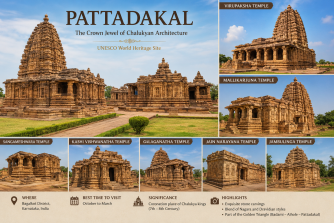
Pattadakal – The Crown Jewel of Chalukyan Architecture
Nestled on the banks of the Malaprabha River in Bagalkot district of Karnataka, Pattadakal is one of India's most treasured heritage destinations. Recognized as a UNESCO World Heritage Site, Pattadakal is renowned for its magnificent temples, intricate stone carvings, and historical significance. The site represents the pinnacle of Early Chalukyan architecture and attracts history enthusiasts, pilgrims, archaeologists, and travelers from around the world.
The name Pattadakal literally means "Place of Coronation." During the reign of the Chalukya dynasty between the 7th and 8th centuries, this sacred town served as the ceremonial site where kings were crowned. Its strategic location and cultural importance made it a center of art, religion, and architecture. Today, Pattadakal stands as a testimony to the creativity and engineering excellence of ancient India.
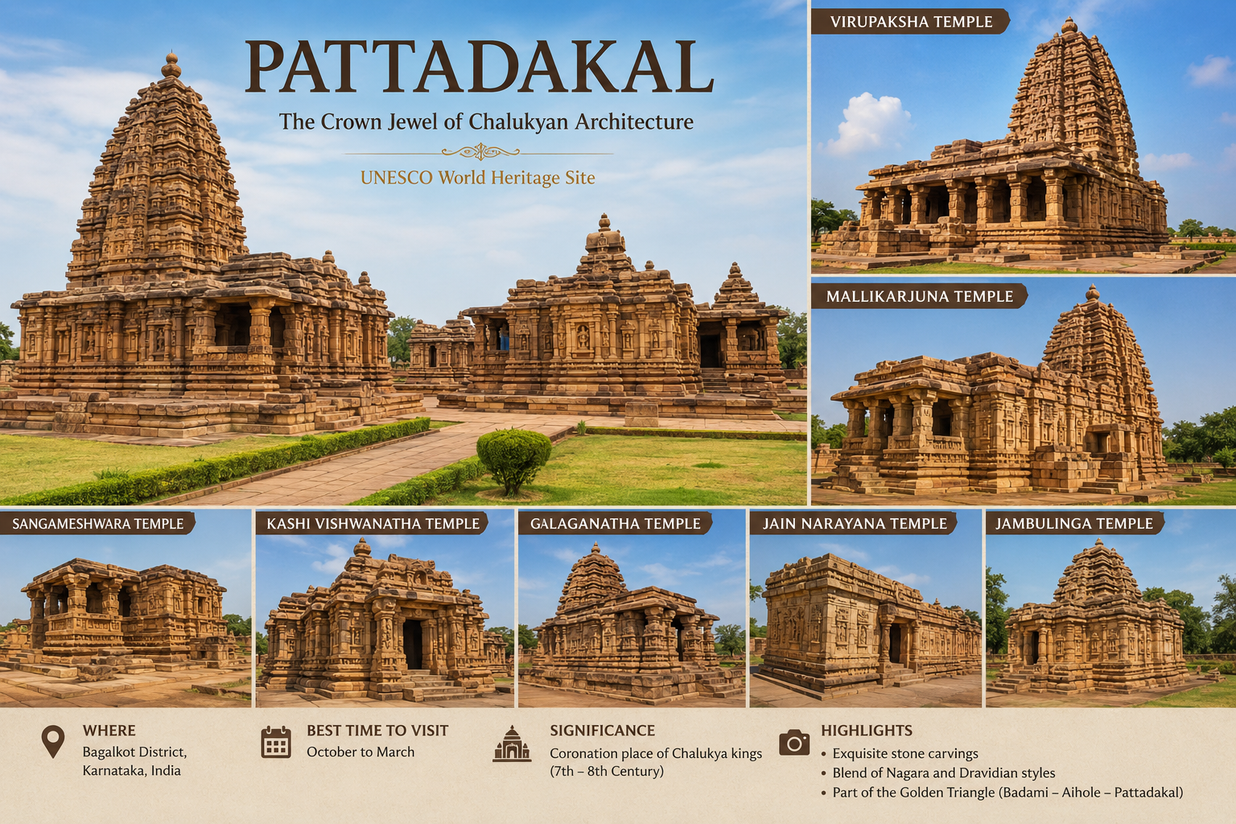
One of the most fascinating aspects of Pattadakal is its unique blend of architectural styles. The temple complex showcases both North Indian Nagara and South Indian Dravidian styles of temple construction. This harmonious combination reflects the cultural exchange that flourished under the Chalukya rulers. The temples are not only places of worship but also masterpieces of architectural innovation.
The most prominent structure in Pattadakal is the Virupaksha Temple. Built in the 8th century by Queen Lokamahadevi to commemorate her husband King Vikramaditya II's victory over the Pallavas, the temple is considered the finest example of Chalukyan architecture. Dedicated to Lord Shiva, the temple features a towering gateway, beautifully carved pillars, and detailed sculptures depicting scenes from Hindu epics such as the Ramayana and Mahabharata.
Another important monument within the complex is the Mallikarjuna Temple. Constructed around the same period, it resembles the Virupaksha Temple but on a slightly smaller scale. The temple is admired for its exquisite carvings and elegant design. Together, these two temples highlight the artistic achievements of the Chalukya dynasty.
The Sangameshwara Temple is one of the oldest temples in Pattadakal. Though incomplete, it remains a remarkable example of Dravidian architecture. Visitors can observe the impressive craftsmanship of the builders through its stone pillars, sanctum, and decorative elements. The temple provides valuable insight into the evolution of temple architecture during the Chalukyan era.
The Kashi Vishwanatha Temple is another notable attraction in Pattadakal. Dedicated to Lord Shiva, it combines both northern and southern architectural influences. Its beautifully sculpted walls depict various deities, celestial beings, and mythological scenes. The detailed artwork demonstrates the exceptional skills of ancient sculptors.
Apart from these major temples, Pattadakal is home to several other monuments including the Galaganatha Temple, Jambulinga Temple, Chandrashekhara Temple, and Jain Narayana Temple. Each structure contributes to the historical and cultural richness of the site. Visitors can spend hours exploring the intricate carvings and architectural details that adorn these ancient monuments.
The sculptures at Pattadakal deserve special mention. The temple walls are covered with artistic depictions of gods, goddesses, dancers, musicians, animals, and scenes from daily life. These carvings not only serve a religious purpose but also provide a glimpse into the social and cultural life of ancient Karnataka. Every sculpture tells a story, making the site a living museum of Indian art and history.
Pattadakal's UNESCO World Heritage status has helped preserve its monuments for future generations. Archaeological conservation efforts ensure that the temples remain protected while allowing visitors to appreciate their historical significance. The site is maintained by the Archaeological Survey of India and continues to be an important center for heritage tourism.
The best time to visit Pattadakal is between October and March when the weather is pleasant and ideal for sightseeing. During this period, visitors can comfortably explore the temple complex and nearby attractions. The annual Pattadakal Dance Festival is another highlight. Organized against the backdrop of the ancient temples, the festival showcases classical Indian dance forms and attracts performers and audiences from across the country.
Pattadakal is conveniently located near other famous heritage sites such as Badami and Aihole. Together, these destinations form the celebrated "Golden Triangle of Chalukyan Heritage." Travelers often visit all three sites to gain a comprehensive understanding of Chalukyan history and architecture.
For photography enthusiasts, Pattadakal offers endless opportunities to capture stunning images. The intricate stone carvings, majestic temple towers, and scenic surroundings create a picturesque setting. Early morning and late afternoon are particularly ideal times for photography, as the soft sunlight enhances the beauty of the monuments.
In conclusion, Pattadakal is much more than a collection of ancient temples. It is a symbol of Karnataka's rich cultural heritage and India's architectural brilliance. The site reflects the artistic vision, religious devotion, and engineering expertise of the Chalukya dynasty. Whether you are a history lover, architecture enthusiast, spiritual traveler, or cultural explorer, Pattadakal promises an unforgettable experience. A visit to this remarkable UNESCO World Heritage Site offers a journey back in time and a deeper appreciation of India's glorious past.